Table Of Content
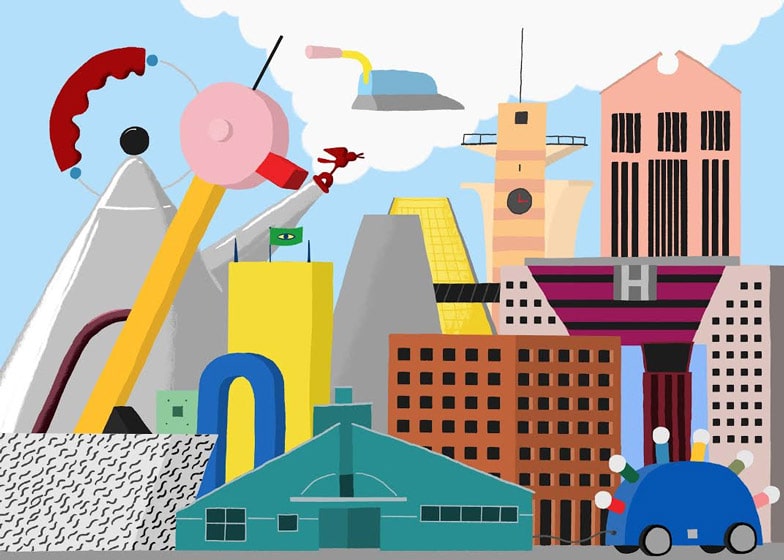
Fluxus artists preferred to work with whatever materials were at hand, and either created their own work or collaborated in the creation process with their colleagues. Critics of the reductionism of modernism often noted the abandonment of the teaching of architectural history as a causal factor. The fact that a number of the major players in the shift away from modernism were trained at Princeton University's School of Architecture, where recourse to history continued to be a part of design training in the 1940s and 1950s, was significant. The increasing rise of interest in history had a profound impact on architectural education.
The Ultimate Guide to Postmodern Design and Decor
Conceptual art is sometimes labelled as postmodern because it is expressly involved in deconstruction of what makes a work of art, "art". Conceptual art, because it is often designed to confront, offend or attack notions held by many of the people who view it, is regarded with particular controversy. Located in New Orleans, the Piazza d’Italia was completed in 1978 following the designs of postmodernist Charles Moore and Perez Architects. The public plaza is located behind the American Italian Cultural Center and features an Italian peninsula-shaped fountain surrounded by a Roman temple, clock tower, campanile, and multiple hemicyclical colonnades.
Examples of Post Modern Architecture
The Post-Postmodern Lettering of Daniel Pelavin - PRINT Magazine
The Post-Postmodern Lettering of Daniel Pelavin.
Posted: Fri, 02 Oct 2015 07:00:00 GMT [source]
Postmodern design is also a morphing style that changes with the context of the designer and the design project. Contemporary trends like Y2K, Street art, Anti-design and Brutalism are keeping the postmodern design spirit alive and well in the 21st century. In essence, the term was more common amongst theorists than actual artists, primarily as a way to group a number of diverse, eclectic art movements under one big umbrella. Designers in the 1980’s used salvaged and distressed materials to create an air of urban apocalypse, a technique that remains in heavy rotation today. However, says Croughan, chunky knits and natural wood grains can be used to add warmth and charm to a postmodern room.
Production in View: Allan Sekula’s Fish Story and the Thawing of Postmodernism
Johnson's AT&T Building, which opened in 1984 in New York, came to be known as a "Declaration of Independence" from modernism and features a symmetrical tower sheathed in pink granite and topped with a crown resembling a broken pediment. While Johnson helped establish modernist architecture in the United States, what fascinated him most was the idea of the new, so he moved on to experiment with decorative classicism and embrace the reuse of historical elements, in a style that would become known as postmodernism. Postmodernism has its origins in the perceived failure of modern architecture.[58] Its preoccupation with functionalism and economical building meant that ornaments were done away with and the buildings were cloaked in a stark rational appearance. Many felt the buildings failed to meet the human need for comfort both for body and for the eye, that modernism did not account for the desire for beauty. The problem worsened when some already monotonous apartment blocks degenerated into slums. In response, architects sought to reintroduce ornament, color, decoration and human scale to buildings.

The Dezeen guide to Postmodern architecture and design
American Marxist philosopher Fredric Jameson argues the condition of life and production will be reflected in all activity, including the making of art. But that’s the beauty of design, especially in this day and age – there are so many styles to choose from and there is no right or wrong. If you’re going the chubby furniture route, that will help counter this problem a lot. But if not, definitely don’t forget to soften the hard chunky sculptural stuff with other natural, warmer materials like rattan, plaster, faux fur, velvet and materials like that. Then the chair had a revival in the late 70s, and now, because 70s & 80s furniture is back, these chairs are stylish yet again.
WHERE TO SHOP POSTMODERN?
The historical quotations of this architecture – the red-sauce-restaurant Baroque, the swaggy Art Deco, that infamous broken pediment – were meant to provoke, for sure. Minimalists like Donald Judd, Dan Flavin, Carl Andre, Agnes Martin, John McCracken and others continued to produce their late modernist paintings and sculpture for the remainder of their careers. These forms are not reduced to an absolute minimum; they are built and shaped for their own sake. The building units all fit together in a very organic way, which enhances the effect of the forms. The headquarters of the Secret Intelligence Service (SIS) building or M16 Building in London, completed in 1994, was designed by Terry Farrell and Partners.
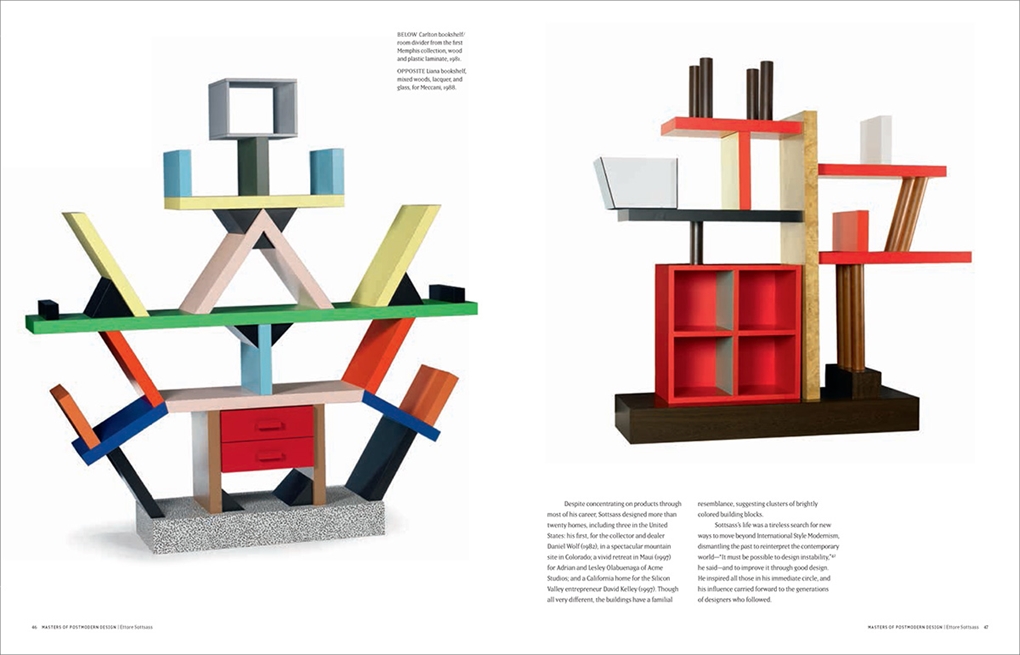
One example being the signs of Jenny Holzer which use the devices of art to convey specific messages, such as "Protect Me From What I Want". Installation Art has been important in determining the spaces selected for museums of contemporary art in order to be able to hold the large works which are composed of vast collages of manufactured and found objects. These installations and collages are often electrified, with moving parts and lights. One building form that typifies the explorations of postmodernism is the traditional gable roof, in place of the iconic flat roof of modernism. For instance, Robert Venturi's Vanna Venturi House breaks the gable in the middle, denying the functionality of the form, and Philip Johnson's 1001 Fifth Avenue building in Manhattan[c] advertises a mansard roof form as an obviously flat, false front. In many ways, postmodernism is about attitude, and nowhere is that attitude more apparent nowadays than in the anti-design and brutalist movements of digital design.
This idea was even taken further to say that knowledge cannot be understood without considering its context. While noteworthy examples of modern architecture responded both subtly and directly to their physical context,[e] postmodern architecture often addressed the context in terms of the materials, forms and details of the buildings around it—the cultural context. Starting in the late 1960s and early 1970s, “the idea that one could simply build a better world had very much run its course,” Hopkins adds. People no longer believed that architecture could solve many deep-rooted social, political, social, and racial injustices. “There was a very dramatic shift, and that was what postmodernism was about.” In 1966, architect Robert Venturi published a book titled Complexity and Contradiction in Architecture in which he explored the ways he hoped a new style could replace modernism.
He would appropriate his subject matter from newspapers or photographs so that he could focus on the act of painting rather than on deciding what to paint. He argues that this method keeps interpretational possibilities open by not limiting what the viewer can see. The Language of Post-Modern Architecture, which Jencks published in 1977, popularised the term "Postmodernism" and established him as the lightning-rod advocate for the movement. In the book, Jencks essentially laid claim to the work of a number of his contemporaries, drafting them into the cause whether they liked it or not. Of particular interest was his idea of "double coding," by which a structure like Moore's Piazza d'Italia could operate at the level of advanced architecture while also appealing to a broad popular audience. An important series of movements in art which have consistently been described as postmodern involved installation art and creation of artifacts that are conceptual in nature.
The denials were curious to us, given that Postmodernism was influentially defined by Fredric Jameson as "the cultural logic of late capitalism." That makes it sound rather pervasive. But if, like the Wizard of Oz, Postmodernism was both great and powerful, it pays to look behind the curtain. The Haas School of Business at the University of California, Berkeley blends in with both the neo-Renaissance architecture of the Berkeley campus and with picturesque early 20th century wooden residential architecture in the neighboring Berkeley Hills. If you decide to use pattern, I wouldn’t necessarily go with the traditional 80s patterns, but graphic patterns can work well with this style – so you know, try introducing bold stripes, grids or checkers. And the second thing to remember is that a lot of postmodern materials are quite hard and cold materials.
Award-winning artist and designer Pablo Solomon notes that early on, bold, primary colors were prominent in postmodern design. Later, however, color became less important as the play between form and function gained more emphasis. If you remember the characteristics of Postmodern architecture, you may have caught that this cat is actually a duck! Or at least, it is a duck in the Venturi, Scott Brown, and Izenour idea that buildings are either shaped like objects (ducks) or shaped like buildings and adorned with decoration (decorated sheds). The term “duck” comes from Learning from Las Vegas, the book by Venturi, Scott Brown, and Izenour that outlined many Postmodernist ideas.


No comments:
Post a Comment